N.M. Company

Investment business plan

A plant for the production, processing and packaging of iodized, technical and road salt in Georgia

Project

Salt processing and packaging plant

Project initiator
Vakhtang Masurashvili
Project location
Kareli municipality, Shida Kartli, Georgia
6 km from the highwayLand area – 6,000 m²The land is owned by the project initiator
Design capacity
30,000 t/year
Total investment
$4,000,000
Implementation period
12–15 months
Jobs
81

Investment business plan

The full project description — from the market and technology to the financial model.

01

Project overview

1Project summary

The project provides for the creation of a modern salt processing and packaging plant in Georgia that will produce, from imported rock salt:

  • iodized edible salt;
  • technical salt;
  • road salt.

The plant will operate a full technological cycle, covering:

  • raw material intake;
  • cleaning;
  • milling;
  • fractionation;
  • iodization;
  • automated packaging;
  • warehousing;
  • sales and distribution.

The aim of the project is to establish local production in Georgia and reduce dependence on salt imports.
2Project objectives

The main objectives of the project are:

  • to establish a strong local producer on the Georgian salt market;
  • to capture 30–45% of the market;
  • to partially replace imported finished products;
  • to produce competitively priced products;
  • to ensure a stable supply;
  • to create new jobs;
  • to develop the technical and road salt segment.
02

Market and competitive advantages

3Analysis of the Georgian salt market

Salt is a strategic everyday consumer product.

The main consumers of salt in Georgia are:

  • households;
  • retail chains;
  • wholesale distributors;
  • the food industry;
  • bakeries;
  • meat and dairy processors;
  • hotels and restaurants;
  • municipal and state bodies.

The Georgian market is almost entirely dependent on imports.

Annual salt consumption in the country is estimated at
65,000–70,000 tonnes per year
The plant's design capacity
30,000 tonnes per year
The plant will be able to supply approximately
40–45% of the Georgian market

4Competitive advantages

4.1 Local production

The plant will carry out in-house:

  • raw material processing;
  • quality control;
  • iodization;
  • packaging;
  • distribution.

4.2 Direct import of raw material

Raw material sources:

  • Iran;
  • Turkey.
Rock salt purchase price
8–10 USD/tonne
Used in the financial model
10 USD/tonne

Direct purchasing significantly reduces costs and increases competitiveness.

4.3 Own transport system

International shipping

  • 10 trucks;
  • payload – 25 tonnes;
  • trips to Iran.

Domestic distribution

  • 5 distribution vehicles;
  • service across Georgia's regions.

4.4 The need for solar energy

Salt production is an energy-intensive process.

Energy costs in Iran and Turkey are often lower, which gives products made there a competitive advantage.

For this reason the project provides for a solar power plant.

Using solar energy will:

  • reduce electricity costs;
  • reduce the cost of production;
  • increase competitiveness;
  • reduce the risk of rising energy prices;
  • protect local production in competition with imported products.
03

Production and products

5Production capacity

Operating mode
2 shifts
Working time
16 hours a day
Annual output
30,000 tonnes

The plant will be designed from the outset to allow for future expansion.

6Product range

The plant will produce three main products:

6.1 Iodized edible salt

The core product.

Packaging:

  • 1 kg pack
  • 20 kg sack

Annual structure:

  • 40% — 1 kg packs
  • 60% — 20 kg sacks

6.2 Technical salt

Technical salt will be intended for:

  • industrial enterprises;
  • the livestock sector;
  • various technological processes.

6.3 Road salt

Road salt will be intended for:

  • municipal services;
  • government agencies;
  • private road operators;
  • winter road treatment.

7Use of a third shift

The plant will be designed so that a third shift can be added when needed.

The third shift will be used for:

  • technical salt production;
  • road salt production;
  • serving state and municipal tenders.

This segment will increase total turnover by approximately 30%.

8Raw material

Main raw material
Rock salt
Supplier countries
Iran, Turkey
Estimated purchase price
8–10 USD/tonne
Used in the financial calculations
10 USD/tonne
04

Technology and infrastructure

9Technological process

The plant will operate a full technological cycle.

  1. 1Raw material intake
  2. 2Warehousing
  3. 3Cleaning and removal of impurities
  4. 4Milling
  5. 5Sieving and fractionation
  6. 6Iodization
  7. 7Quality control
  8. 8Automated packaging
  9. 9Palletizing
  10. 10Finished goods warehousing
  11. 11Sales and distribution
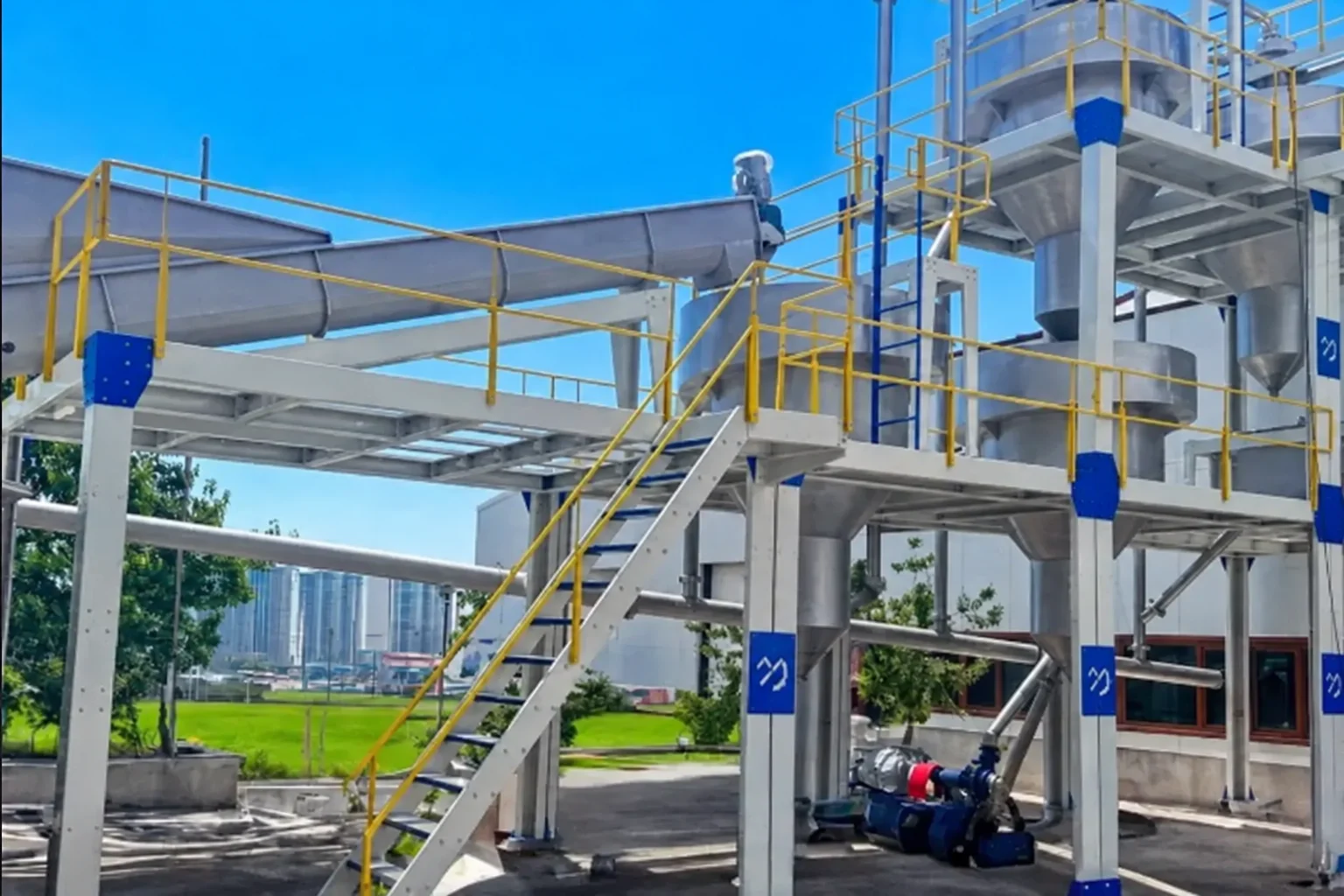
Salt processing line
Example of a processing line

10Infrastructure

The project will be located on a 6,000 m² site.

The plant's infrastructure includesArea
Production building (height: 15 metres)1,500 m²
Raw material warehouse1,200 m²
Finished goods warehouse1,200 m²
Technical and administrative areas300 m²
Loading yards and internal roads1,800 m²

11Solar power plant

The project provides for the plant's own solar power station.

Capacity
300–400 kW

Purpose:

  • reducing electricity costs;
  • increasing competitiveness;
  • energy independence;
  • reducing the cost of production.

12Water supply

The plant will be supplied by its own industrial borehole.

The borehole will be used for:

  • technological processes;
  • domestic use;
  • the fire safety system.

13Process equipment

A fully automated line of Chinese manufacture will be selected for the plant.

Main equipment:

  • raw material intake system;
  • salt cleaning unit;
  • crushing and milling equipment;
  • sieving and fractionation system;
  • iodization system;
  • automated 1 kg packaging line;
  • automated 20 kg sack packaging line;
  • conveyors;
  • palletizing system;
  • automated control system.

14Cost of the processing line

Estimated cost
900,000 – 1,500,000 USD

Includes:

  • design;
  • equipment manufacturing;
  • delivery;
  • installation;
  • commissioning;
  • staff training.

The final cost will be determined once commercial offers have been received.

05

Organization and staff

15Organizational structure

The plant will be managed according to modern management principles.

The organizational structure includes:

  • General Director;
  • Finance Manager;
  • Production Manager;
  • Logistics Manager;
  • Sales Manager;
  • technical service;
  • warehouse service;
  • production staff.

16Staff

PositionHeadcount
Administration
General Director1
Finance Manager1
Production Manager1
Logistics Manager1
Sales Manager1
Office Administrator1
Total6
Technical staff
Mechanics3
Electricians3
Total6
Production staff
Line operators24
Packaging operators16
Total40
Warehouse
Warehouse staff8
Transport
International drivers10
Domestic distribution drivers5
Total15
Total headcount81 employees

17Remuneration

Salary — minimum
1,500 GEL
Salary — maximum
4,000 GEL
Average annual payroll
2,240,000 GEL
Including a reserve fund
2,400,000 GEL per year
06

Logistics

18Transport system

International shipping

Trucks
10
Payload
25 tonnes
Trip length
1,200 km
Route
Georgia – Iran – Georgia

Domestic distribution

Vehicles
5
Service area
All of Georgia
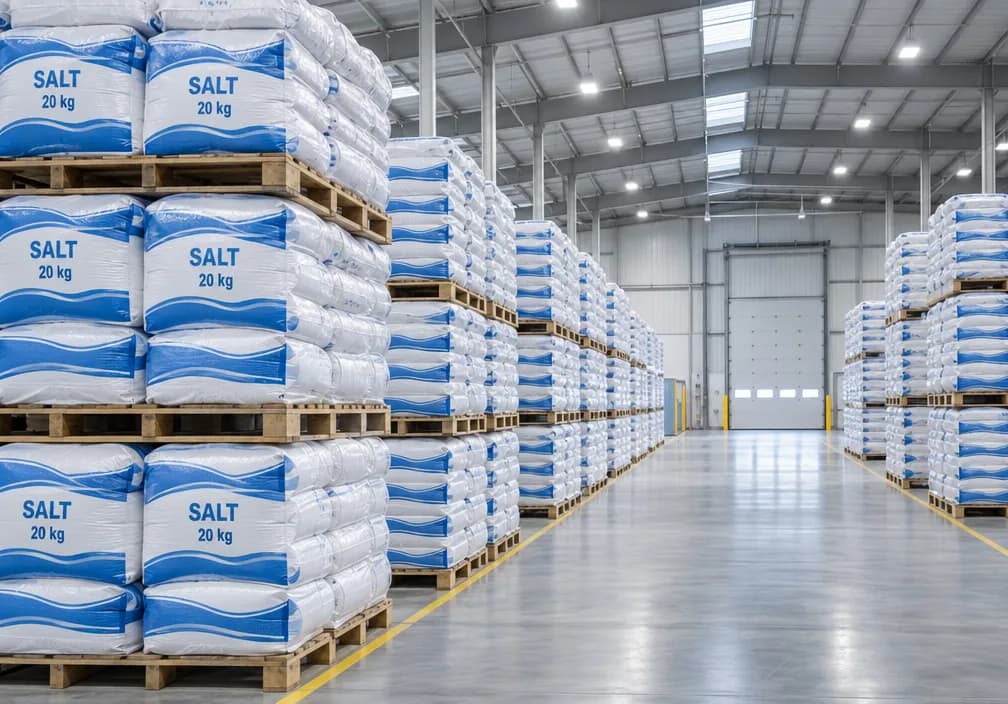
Finished goods warehouse

19Cost of the vehicle fleet

International trucks (used)

Quantity
10
Estimated cost
450,000 USD

Domestic distribution vehicles

Quantity
5
Estimated cost
125,000 USD

Total

Estimated cost
575,000 USD
07

Investment and timeline

20Capital expenditure

Site preparation

Includes
gravelling, internal roads, concrete works
Cost
200,000 USD

Buildings

Includes
production building, raw material warehouse, finished goods warehouse, administrative block
Cost
1,000,000 USD

Processing line

Includes
Chinese manufacture
Cost
1,200,000 USD

Solar power plant

Includes
300–400 kW
Cost
300,000 USD

Borehole

Cost
75,000 USD

Vehicle fleet

Cost
575,000 USD

Auxiliary equipment

Includes
loader, warehouse equipment, pallet system
Cost
150,000 USD

Working capital

Includes
3 months' stock: raw material, fuel, salaries, packaging
Cost
500,000 USD

21Total investment cost

Site200,000 USD
Buildings1,000,000 USD
Processing line1,200,000 USD
Solar power plant300,000 USD
Borehole75,000 USD
Transport575,000 USD
Auxiliary equipment150,000 USD
Working capital500,000 USD
Total investment4,000,000 USD

22Implementation timeline

Design2 months
Permits1 month
Construction works6 months
Equipment manufacturing5 months
Transportation1 month
Installation2 months
Testing and commissioning1 month
Overall timeline12–15 months

From project start to commercial operation.

08

Financial model

23Annual production

The plant will operate on a two-shift basis.

Annual output
30,000 tonnes of salt

1 kg iodized salt

Share
40%
Annual volume
12,000 tonnes
Equivalent to
12,000,000 × 1 kg packs

20 kg sacks

Share
60%
Annual volume
18,000 tonnes
Equivalent to
900,000 sacks

24Selling prices

ProductWholesale price
1 kg iodized salt0.55 GEL
20 kg sack7.20 – 8.00 GEL (used in the financial model: 7.60 GEL)

25Annual revenue

1 kg packs

Calculation
12,000,000 units × 0.55 GEL
Annual turnover
6,600,000 GEL

20 kg sacks

Calculation
900,000 sacks × 7.60 GEL
Annual turnover
6,840,000 GEL

Core product turnover

Calculation
6,600,000 + 6,840,000
Annual turnover
13,440,000 GEL

26Additional technical and road salt segment

Using a third shift, the plant will be able to:

  • produce technical salt;
  • produce road salt;
  • serve municipal tenders.
Additional turnover is estimated at
30% of core turnover
13,440,000 × 30%
Additional turnover
4,032,000 GEL

27Total annual turnover

Core turnover13,440,000 GEL
Additional turnover4,032,000 GEL
Total annual turnover17,472,000 GEL

28Raw material cost

Annual volume
30,000 tonnes
Purchase price
10 USD/tonne
Total cost
300,000 USD
approximately 810,000 GEL

29Transportation costs

Includes:

  • international shipping;
  • customs costs;
  • fuel;
  • road tolls;
  • vehicle maintenance.
Annual cost
3,300,000 GEL

30Payroll

Employees
81
Annual payroll
2,400,000 GEL

31Packaging cost

  • Bags
  • Sacks
  • Labels
  • Pallets
Annual cost
1,500,000 GEL

32Energy costs

Even with the solar power plant, the following remain:

  • grid electricity;
  • technical servicing;
  • repairs.
Annual cost
900,000 GEL

33Domestic distribution

  • Fuel
  • Drivers
  • Vehicle upkeep
Annual cost
700,000 GEL

34Administrative costs

  • Office
  • Utilities
  • Communications
  • Legal services
  • Accounting
  • Insurance
Annual cost
600,000 GEL

35Summary of operating costs

Raw material810,000 GEL
Transportation3,300,000 GEL
Salaries2,400,000 GEL
Packaging1,500,000 GEL
Energy and technical servicing900,000 GEL
Domestic distribution700,000 GEL
Administrative costs600,000 GEL
Total operating costs10,210,000 GEL

36Operating profit

Total turnover17,472,000 GEL
Operating costs10,210,000 GEL
Annual operating profit7,262,000 GEL

37Profit margin

Profit margin
approximately 41.5%
7,262,000 ÷ 17,472,000

38Return on investment

Total investment
4,000,000 USD
Operating profit
7,262,000 GEL per year
Estimated payback period
3–4 years
09

Conclusions, risks and development

39Financial conclusion

The project is a high-margin industrial investment.

Key advantages:

  • a growing market;
  • local production;
  • own logistics;
  • low raw material cost;
  • an additional technical and road salt segment;
  • use of solar energy;
  • the potential to capture 40–45% of the market.

The project has significant potential to generate stable cash flows and to expand further.

40Key project risks and their management

40.1 Raw material price risk

Risk: an increase in the international price of rock salt.

Mitigation:

  • working with several suppliers;
  • using the Iranian and Turkish markets in parallel;
  • keeping a 3-month raw material stock;
  • long-term purchase agreements.

40.2 Competition from imported products

Risk: the low production cost of foreign manufacturers.

Mitigation:

  • own production in Georgia;
  • own transport;
  • use of solar energy;
  • local production of packaging;
  • fast delivery to customers.

40.3 Energy price risk

Risk: rising electricity tariffs.

Mitigation: the solar power plant will reduce the plant's dependence on external energy prices.

40.4 Seasonal changes in demand

Risk: changes in demand in winter or summer.

Mitigation: developing the technical and road salt segment, which provides additional revenue throughout the year.

41Development strategy

The project will be designed from the outset to allow for expansion.

In future it will be possible to:

  • increase production capacity;
  • add new packaging lines;
  • start exporting;
  • set up regional warehouses;
  • produce our own packaging materials.

42Social and economic impact

The project will create:

  • approximately 81 permanent jobs;
  • additional jobs in logistics;
  • new opportunities for local service companies.

The project will contribute to:

  • the development of Georgian manufacturing;
  • a reduction in imports;
  • strengthening the local economy.

43Environmental approach

The project provides for:

  • the use of solar energy;
  • efficient energy use;
  • waste control;
  • the use of modern process equipment.

44Final investment conclusion

The project to establish an iodized, technical and road salt plant in Georgia is a strategic investment opportunity.

The project's main advantages are:

  • a growing and stable market;
  • an import-dependent sector;
  • the advantage of local production;
  • a full technological cycle;
  • own logistics system;
  • reduced energy costs;
  • additional revenue from technical and road salt production.
Annual plant capacity
30,000 tonnes
Estimated annual turnover
17.47 million GEL
Estimated operating profit
7.26 million GEL
Investment volume
approximately 4 million USD
Estimated payback period
3–4 years

The project is a long-term, sustainable and scalable industrial investment in the Georgian market.

Investor questions and answers

The most frequently asked questions about the project, products, raw materials, technology and finances.

About the project

What is the main goal of the project?

The project's goal is to build a plant in Georgia that uses modern technology to produce iodized edible salt, supplying the local market with a quality Georgian product and reducing dependence on imports.

The plant will be located in Kareli municipality, on a site of approximately 6,000 m².

The base production volume is calculated at 15,000 tonnes of finished iodized salt per year, on one 8-hour shift.

Why is this project attractive to an investor?

The project's main advantage is that it is a business built on an everyday consumer product. Salt is an essential product, and demand for it is relatively stable.

In addition, the project has several further advantages:

  • a significant share of the salt in Georgia is imported;
  • raw material can be sourced from several neighbouring countries;
  • the product can be produced all year round;
  • different packaging and price segments can be created;
  • high-margin small packs can be added;
  • production load can be increased with second and third shifts;
  • suitable fractions separated during production can be sold commercially as road salt.
Why was 15,000 tonnes per year chosen?

15,000 tonnes is the project's base, conservative production volume.

It is calculated on:

  • 300 working days;
  • 8 hours a day;
  • one shift;
  • an average of 50 tonnes of finished product per day.

50 tonnes × 300 days = 15,000 tonnes per year.

This approach lets the investor assess the project's financial performance on single-shift operation rather than at maximum load.

Can production be increased?

Yes. Using the same production infrastructure, and subject to confirmation of the technical capability, the operating mode can be increased:

ModeAnnual production
1 shift / 8 hours15,000 tonnes
2 shifts / 16 hours30,000 tonnes
3 shifts / 24 hours45,000 tonnes

This represents a growth opportunity, not the base financial calculation.

Products

What will the plant produce?

The base product will be iodized edible salt in various packaging.

The main initial formats are:

  • 1 kg;
  • 20 kg.

Small, high-margin packs will be added at a later stage.

Why were 1 kg and 20 kg packs chosen?

The 1 kg pack targets retail consumers, while the 20 kg pack targets the professional and wholesale segment.

This way the plant works at the same time with:

  • retail chains;
  • wholesale distributors;
  • restaurants;
  • hotels;
  • food manufacturers;
  • other B2B customers.
What will the product split be?

The base financial model uses the following split:

  • 40% — 1 kg packs
  • 60% — 20 kg packs

Out of 15,000 tonnes, this means:

  • 6,000 tonnes — 1 kg packs;
  • 9,000 tonnes — 20 kg packs.

Additional high-margin products

What other opportunities does this project offer for additional revenue?

This is one of the project's most important growth opportunities.

Besides the core 1 kg and 20 kg products, the plant will be able to gradually add high value-added products.

Of particular interest are 0.250 and 0.800 gram individual portions in attractive, modern packaging.

Their target customers will be:

  • hotels;
  • restaurants;
  • cafés;
  • food outlets;
  • catering companies;
  • airlines;
  • the premium segment.

An additional margin of approximately 1 GEL per kilogram is assumed for this product.

In other words, small packs let us sell the same core product at a higher added value.

Why are 0.250 and 0.800 gram portions attractive?

Because with small packs the customer pays not only for the salt, but also for:

  • the packaging design;
  • convenience;
  • hygiene;
  • the brand;
  • individual use;
  • quality of service.

So revenue per kilogram on small packs can significantly exceed that of regular 1 kg or 20 kg packs.

Is production under the customer's own brand possible?

Yes. Private Label products can be offered to B2B customers.

For example, individual salt portions made under the name of a hotel, restaurant or food chain.

This creates an additional commercial opportunity and allows a higher price.

What other additional products could be created?

As the project develops, the following could be considered:

  • small packs of various weights;
  • premium-design salt;
  • individual portions for hotels and restaurants;
  • production under our own brand;
  • production under the customer's brand;
  • salt products for other purposes;
  • using suitable technical fractions as road salt.

The specific commercial effect of these directions will have to be established from the market and actual orders.

Raw material

Where will the raw material come from?

The main raw material will be rock salt, which can be purchased from several directions, including:

  • Turkey;
  • Iran;
  • Azerbaijan/Nakhchivan.

Having several supplier countries reduces dependence on a single source.

How much does the raw material cost?

The base financial model uses 8 USD per tonne of raw salt.

Working exchange rate
1 USD = 2.70 GEL
That is
21.60 GEL/tonne
8 × 2.70

This is an assumption of the financial model and must ultimately be replaced by an actual supplier's commercial offer.

How much raw material will be needed per year?

For base production, a supply of around 15,000 tonnes of raw material is needed, although the actual requirement will depend on the raw material's quality, moisture, impurities and process losses.

The actual raw material yield should therefore be determined by the technology supplier in the final technical and financial model.

Waste and additional revenue

How much waste does the production process generate?

According to the practical range given by technology suppliers, there may be approximately 3–8% process waste/separated fraction, depending on the quality of the raw material and the processing technology.

For 15,000 tonnes this is approximately:
3%450 tonnes
5%750 tonnes
8%1,200 tonnes
Is this waste lost entirely?

Not necessarily.

One of the project's important advantages is the possibility of using suitable fractions as road de-icing salt.

That is, the portion that does not meet edible salt requirements but is technically suitable for other purposes can be used as a separate product, subject to the relevant standards and quality control.

With this approach the plant aims for a near-zero-waste economic model.

Can road salt become an additional source of revenue?

Yes, this is an additional commercial direction.

If the fraction obtained from the process meets the relevant road salt requirements, it can be sold separately.

In this case the plant gains two economic benefits:

  • it reduces the cost of waste disposal;
  • it earns additional revenue from selling a by-product.

Transportation

How much does raw material transport cost?

The base model uses: 700 USD per full trip, with a 25-tonne load.

At 2.70 GEL/USD700 × 2.70 = 1,890 GEL/trip
For 15,000 tonnes15,000 ÷ 25 = 600 trips per year
Annual transport cost600 × 1,890 = 1,134,000 GEL

This too is a working assumption of the financial model and must ultimately be confirmed by transport companies' offers.

Technology and plant

What technology will be used to produce the salt?

The plant will use an industrial processing line covering raw material intake, processing, cleaning, washing/dissolving where necessary, drying, fractionation, iodization and packaging.

The exact process scheme must be finally approved with the selected EPC/technology company.

What line capacity is needed?

For 15,000 tonnes per year, with 300 working days and an 8-hour shift, the average requirement is:

50 tonnes/day = 6.25 tonnes/hour.

In practical design, a line of around the 8 tonnes/hour class is therefore considered, to provide a technological margin and make it possible to meet the planned production.

What is the plant's main equipment?

The plant's technological complex may include:

  • a raw material intake system;
  • crushing/grinding;
  • a washing and cleaning system;
  • a salt processing line;
  • a centrifuge, if needed;
  • a dryer;
  • sieves;
  • an iodization system;
  • transport conveyors;
  • automatic dosing;
  • packaging lines;
  • a 1 kg packaging line;
  • a 20 kg packaging line;
  • a small-pack line;
  • laboratory equipment;
  • electrical and control systems.

The final list must be determined by the technology supplier's technical offer.

Salt corrosion

How will metal corrosion caused by salt be addressed?

This is an important technical issue for the project.

Because of the corrosion risk in a salt environment, critical parts in direct contact with food or salt will be required to use an appropriate grade of stainless steel, particularly SS316L, and SS304/304L where technically acceptable.

The supplier will be required to provide:

  • material certificates;
  • confirmation of the grade of metal used;
  • a corrosion protection solution;
  • a separate specification for parts in contact with salt.

Quality and food safety

How will product quality be ensured?

The plant must have a quality control system, including:

  • raw material control;
  • moisture control;
  • salt purity control;
  • iodine content control;
  • packaging control;
  • weight control;
  • laboratory analysis;
  • batch control of the finished product.

The plant must operate in line with Georgia's current food safety and labelling requirements.

Why is iodization important?

In Georgia, iodization requirements for salt intended for human consumption are regulated by law. Accordingly, the plant's products must meet the applicable national standards and requirements.

Market

Is there a market in Georgia for 15,000 tonnes of salt?

Yes. A significant volume of the salt on the Georgian market is imported.

According to 2024 data, under HS code 2501 Georgia imported approximately 68.9 million kg of salt and related products, worth approximately 6.76 million USD.

The main suppliers were Turkey, Iran and Azerbaijan.

This shows that there is a real import-substitution market for a local producer.

Who will the main target customers be?

The main customers will be:

  • retail chains;
  • wholesale distributors;
  • supermarkets;
  • restaurants;
  • hotels;
  • cafés;
  • food manufacturers;
  • catering companies;
  • other B2B customers.

Selling price and revenue

What prices are used in the financial model?
In the base model
1 kg pack0.60 GEL/kg — i.e. 600 GEL/tonne
20 kg pack7.60 GEL/sack — i.e. 380 GEL/tonne

These are base financial assumptions, not a guaranteed market price.

What will the annual revenue be on 15,000 tonnes?
1 kg packs6,000 tonnes × 600 GEL = 3,600,000 GEL
20 kg packs9,000 tonnes × 380 GEL = 3,420,000 GEL
Total annual sales7,020,000 GEL

The weighted average selling price comes to approximately 468 GEL/tonne.

Costs

What is the annual cost of raw material?

15,000 tonnes × 21.60 GEL = 324,000 GEL/year.

What is raw material plus transport?
Raw material324,000 GEL
Transport1,134,000 GEL
Total1,458,000 GEL/year

That is, an average of approximately 97.20 GEL/tonne.

What are the other operating costs?

The base model uses the following working budget:

CostAnnual amount
Raw material324,000 GEL
Transportation1,134,000 GEL
Electricity172,800 GEL
Gas86,400 GEL
Packaging450,000 GEL
Salaries550,000 GEL
Iodine/process materials60,000 GEL
Water50,000 GEL
Repairs/spare parts180,000 GEL
Laboratory40,000 GEL
Administration100,000 GEL
Insurance/security/other80,000 GEL
Marketing100,000 GEL
Total3,327,200 GEL

Competition

How will the plant compete with imported salt?

Its competitive advantages will be:

  • production in Georgia;
  • fast delivery;
  • short logistics lead times;
  • the ability to work with local distributors;
  • flexible packaging;
  • our own brand;
  • Private Label;
  • high margins on small packs;
  • fulfilment of B2B orders.

Why Kareli?

Why was Kareli municipality chosen for the plant?

Kareli's location is attractive from a logistics point of view, as the plant can connect to the central Georgian market and use the east–west transport corridors.

The availability of approximately 6,000 m² of land for the production complex is also important.

Export

Can the products be exported?

Yes. As the plant develops, exports to neighbouring and other markets can be considered, including:

  • Armenia;
  • Azerbaijan;
  • Turkey;
  • other regional markets;
  • later, relevant EU markets, subject to meeting the applicable requirements.

The initial financial model focuses mainly on the local market.

Additional revenue strategy

Will the company's revenue depend solely on salt sales?

No.

The company's long-term model can be based on several revenue streams:

  1. 11 kg retail product
  2. 220 kg professional pack
  3. 30.250 and 0.800 gram premium portions
  4. 4Other small packs
  5. 5Private Label
  6. 6Individual products for hotels and restaurants
  7. 7Road salt
  8. 8Increasing production load with second and third shifts
  9. 9Export sales in future

This creates a diversified revenue model for the business.

The most important question for an investor

What opportunities does this project have to earn even more revenue from the existing plant?

The project's most important opportunity is that the plant should not be seen only as a "salt factory". It can develop into a multi-product platform for salt products.

First stage
15,000 tonnes of iodized salt / year

Next opportunities:

  1. 1High-margin 0.250 and 0.800 gram portions
  2. 2Premium-design packaging
  3. 3Private Label
  4. 4Special products for hotels and restaurants
  5. 5Sale of road salt
  6. 6Moving to a second shift — 30,000 tonnes
  7. 7Moving to a third shift — 45,000 tonnes
  8. 8Developing exports

Growth is therefore possible both by increasing volume and by increasing the margin earned per kilogram.

How quickly can the investment be recovered?

How is the payback period determined?

The payback period will depend on the final CAPEX.

In the base operating model, annual operating profit is approximately
3.69 million GEL

So, for example, if the final investment cost is X million GEL, a simple operating payback is determined approximately by the formula:

Investment ÷ annual operating profit

In the final investment proposal this must be calculated once actual commercial offers for the CAPEX have been received.

A difficult question for an investor

What guarantee does the investor have that the project will be profitable?

There is no 100% guarantee of profit in business.

This project aims to reduce risk through factors such as:

  • an essential consumer product;
  • an import-dependent market;
  • several possible raw material sources;
  • local production;
  • a range of packaging;
  • the possibility of adding high-margin premium products;
  • commercial use of waste;
  • the possibility of increasing production load;
  • a combination of local and export markets.

An investor's decision should be based not only on an optimistic scenario but also on a conservative financial model.

Why should an investor put money into this project?

Because the project combines several important factors:

a stable consumer product + import substitution + local production + several packaging formats + new high-margin products + production growth potential + sale of an additional product.

The base model is calculated on only 15,000 tonnes and one shift, which allows the project's efficiency to be assessed under a relatively cautious production mode.

At the same time, the plant has significant growth potential
15,000 → 30,000 → 45,000 tonnes

And in addition: standard salt → premium packaging → 0.250 and 0.800 gram individual product → Private Label → additional road salt.

What is the project's ultimate vision?

The ultimate goal is to create a modern, automated and competitive Georgian salt plant that will initially operate at an annual capacity of 15,000 tonnes of iodized salt on one shift, and will be able to increase production in line with market demand.

The main direction of the project's development will be not only producing more tonnes, but creating higher added value for every kilogram.

A — volume growth
15,000 → 30,000 → 45,000 tonnes
B — margin growth
20 kg → 1 kg → small packs → 0.250 and 0.800 gram premium portions → Private Label → specialised products

It is these two directions that create the project's long-term investment potential.

Interested in working with us?

Get in touch about the project, partnership and future supply.